
Rating
- Telephony & Data
- 7/10
- Media & Screen
- 6/10
- Systems & programs
- 7/10
- User experience
- 7/10
- Materials & quality
- 7/10
- Total rating
- 68%
Luxurious design
The screen
Unusually annoying unnecessary notifications
The camera
Xiaomi has several different brands that people like to pretend are their own manufacturers. Redmi and Poco both have the character of low-cost brands, but when Xiaomi has to describe what differentiates the different brands, it is often in vague terms about target groups, where Poco is said to be aimed at a younger and more adventurous target group.
Of course, this is just fluff, but it’s unusually easy to tell what it means in practice for Poco: Performance is prioritized at the expense of cameras, and the phones get slightly bolder color choices.
With the Poco M8, it becomes extra clear, because it is essentially a Redmi Note 15 5G where the cameras have been replaced. Dimensions and weight are identical and so are all the specifications except for the camera and for some reason the phone has IP class 65 instead of 66 and is therefore considered to be slightly less resistant to rain.
The Xiaomi Redmi Note 15 5G was the last phone I tested before this one, and therefore it is unusually quick to review the Poco M8. I haven’t even had time to unpack the Redmi Note 15 5G so I can compare them in detail. Feel free to read the test of the Redmi Note 15 5G here, everything except the cameras also applies to the Poco M8 and some things I go into in more detail in the Redmi test.
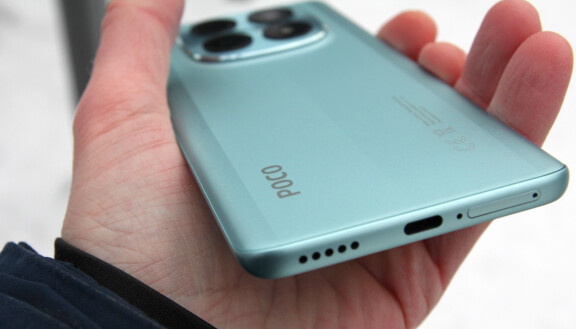
Slim and flexible
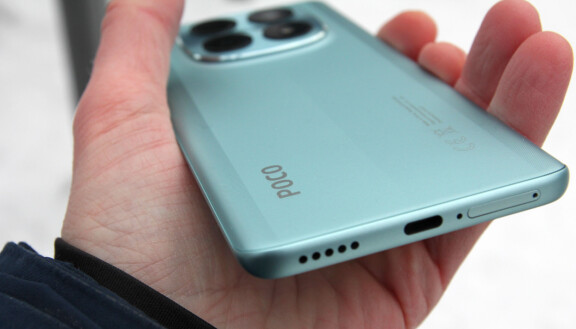
Like the Redmi 15, the Poco M8 has an elegant design with a curved screen with thin black edges and a curved back that makes the phone feel good in the hand. Where the Redmin had a discreet matte black plastic back, the Poco M8 has a mint green back with fields that refract the light a little differently, and is a little more slippery to hold than the Redmin. However, the included case is black, and to be really sure that the phones are identical, I try to use the same case that came with the Redmi Note 15 5G. It fits perfectly.
However, the phones differ slightly in price. Redmi Note 15 5G is sold with 8 GB of working memory and 256 GB of storage at a regular price of SEK 4,290, while the Poco M8 costs SEK 3,690 in the same configuration, SEK 600 cheaper. The Redmi Note 15 5G is also sold with less working memory and storage, while the Poco M8 is instead available with 8/512 GB for SEK 3,990. Both models have space for memory cards. So it’s only in terms of more storage that the Poco M8 has better performance for the price, the processors powering the phone are the same, the Snapdragon 6 gen 3 platform is a year and a half old and wasn’t one of the fastest when it was new. Both in performance tests and, for example, when starting the camera, you notice that the Poco M8 is not super fast, but for the most part it stays away from being disturbingly slow.
Another way in which the Poco M8 gives more for the money is that it comes with a 45-watt charger in the box. The phone also has a pre-installed screen protector which the Redmin lacks.
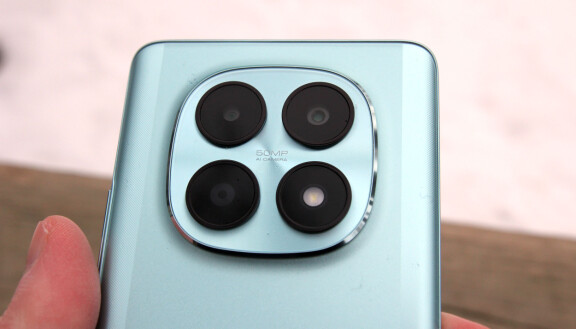
But then we have the cameras, where they saved a lot on the Poco M8. Or should we say the camera, because despite a relatively large camera island, the phone only has a main camera with an unusually small sensor of 1/2.88 inch, and an auxiliary camera for depth measurement when taking pictures with artificial blur. Both the wide-angle camera and the telephoto camera are thus missing, and the main camera’s sensor is only a little more than half the size of the one in the Redmi Note 15 5G.
This of course affects the image result. I wasn’t super impressed with the camera in the Redmi Note 15 5G, but the camera in the Poco M8 is noticeably worse. In sunlight, you get images with decent sharpness and perfectly fine color reproduction, as long as you don’t look too much at the over- or under-exposed parts of the image. In even slightly poorer light, the image becomes blurry quickly. If you want to take a zoomed-in picture, a picture with twice the magnification is possibly slightly sharper than once, but the camera can’t handle more than that. You have to be of the “I don’t care much about the camera” type for this phone to be relevant, because it’s hard to find a phone with a worse camera at a similar price.
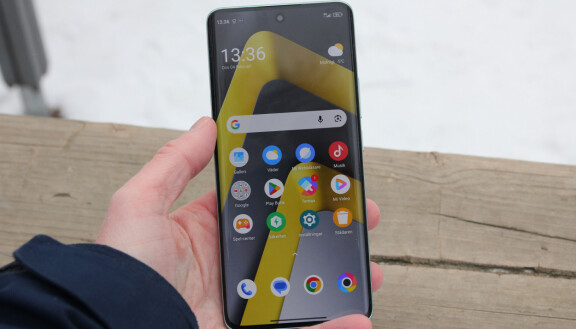
Good screen
Instead, the screen is good. It’s Oled type with vivid colors and true blacks, it has a high refresh rate so the image doesn’t lag when I swipe, and it has really good maximum brightness for outdoor use. However, it lacks the Always On function, which means that the screen can show the clock and other information when the phone is switched off. There is a setting for it, but then it only stays on for 10 seconds after you turn off the screen.
I get about 12 hours of screen time at maximum brightness out of the phone. It is a little less than what I think I should get with the large battery that is in the mobile phone. The standby time also feels perfectly fine but not above average.
Any illusions that Poco is its own mobile brand definitely disappear when you take a closer look at the mobile’s system, which is Android 15 with Xiaomi Hyper OS as an interface. It’s fun to put the Poco M8 next to the Redmi Note 15 5G and browse the system. Then you see that in Poco you have a different theme where the icons are round instead of square, but there are more or less exactly the same apps in the same order on the start screens. The only difference I find is that the set of pre-installed games is slightly different.

I’ve always found Xiaomi’s user interface a little messy, and now they top it off with their own apps starting to send unnecessary notifications. The video player periodically reminds me with small pings that I can search among the videos I’ve recorded, and Xiaomi’s browser sends advertising notifications, which don’t even work as advertising, they’re so blunt that it’s impossible to figure out what they’re about or who the sender is. In any case, you can get rid of these by uninstalling the apps or removing their permission to send notifications.
Leaving aside the camera, the Poco M8 is an affordable mobile that offers a good screen and a lot of storage space for the money, but that’s a pretty big if, because the camera really isn’t very good.
Questions and answers
How are the speakers? Stereo speakers with high maximum volume but not very balanced sound.
How many updates is the Poco M8 promised? Four major system updates, says Xiaomi. It’s worth noting that it doesn’t ship with the latest Android 16.
How is the vibrator feedback? A bit scary, here you feel that it is a cheaper mobile phone.
An alternative
You can get exactly the same mobile but with a better camera for a few hundred bucks more if you choose the Xiaomi Redmi Note 15 5G. If you add a little more, the Redmi Note 15 Pro is better at most things.
Camera example

Even in slightly worse lighting conditions, details start to disappear and the image becomes a little blurry.
Rating
- Telephony & Data
- 7/10
- Media & Screen
- 6/10
- Systems & programs
- 7/10
- User experience
- 7/10
- Materials & quality
- 7/10
- Total rating
- 68%
Facts
Generally
Model Poco M8
Manufacturer Xiaomi
Launch date 2026-01-22
Measure 164 x 75.4 x 7.4 mm
Weight 178 g, 86%
Price From SEK 3690
System Android
System version 15
Promised system updates 4 system updates
The chipset Snapdragon 6 Gen 3
Manufacturing process 4 nm, 95%
Web
GSM band 850 MHz, 900 MHz, 1800 MHz, 1900 MHz
3g band 850 MHz, 900 MHz, 1900 MHz, 2100 MHz
4g band Band 1 (2100 MHz), Band 3 (1800 MHz), Band 4 (1700 MHz), Band 7 (2600 MHz), Band 8 (900 MHz), Band 20 (800 MHz), Band 28 (700 MHz), Band 38 (2600 MHz TDD)
5g band 1 (2100 MHz), 3 (1800 MHz), 7 (2600 MHz), 8 (900 MHz), 20 (800 MHz), 28 (700 MHz), 40 (2300 MHz), 77 (3700 MHz), 78 (3500 MHz)
Dual SIM card slots Yes
Support for e.g No
Support for Wifi calls No
Screen
Measure 6.77 inches, 100%
Resolution 2392 x 1080 pixels
Screen format 20:9
Pixel density 388 ppi, 91%
Type OLED
Max brightness in part of the screen 3200 nits, 99%
Image refresh rate 120 Hz, 100%
Memory
RAM memory 8GB, 80%
Storage memory 256 GB, 512 GB
Memory card slot Yes
Main camera
Max resolution, video 4K
Optical image stabilization No
Sensor size 1/2.88
Resolution 50 Megapixels, 86%
Pixel size 0.61 µm, 65%
Other cameras
Other cameras Depth sensor
Front camera
Sensor size 1/4.0
Resolution 20 Megapixels, 73%
Connections
Headphone jack No
Bluetooth 5.1
WiFi 802.11 a/b/g/n/ac
Battery
Capacity 5520 mAh, 100%
Measured video time 12 hours, 4 minutes
EU Energy Class B
Battery life: EU measurement 50 hours, 8 minutes
Included charger Yes
Effect on the supplied charger 45W, 58%
Maximum fast charging 45W, 79%
Wireless charging No
Battery life, charge cycles 1000, 89%
Durability
IP class IP65
Durability EU classification A
Repairability EU classification C
Miscellaneous
FM radio No
NFC Yes
Stereo speakers Yes
Fingerprint reader In the screen
Benchmark tests
Antutu 11 827402, 41%
Geekbench 6: Single-core 1002, 54%
Geekbench 6: Multi-core 2823 , 51%
Geekbench 6: GPU 2107, 19%
3DMark Wild Life Stress Best 3263, 32%
3DMark Wild Life Stress Lowest 3244, 46%
Google Octane 39640, 79%
Jetstream 2 142,800, 92%
Luxurious design
The screen
Unusually annoying unnecessary notifications
The camera