More durable watch
The main advantage of the Galaxy Watch Ultra 2 is the battery life, the main disadvantage is the price.
- Rating:
- 7/10
Better battery life than the Galaxy Watch 9
Bright screen
Expensive
Loading slowly
A watch named Ultra comes with certain expectations. Compared to the Galaxy Watch 9 which launched at the same time as the Galaxy Watch Ultra 2, I expect the watch to be not so much more luxurious as more durable, more ready for adventure, with longer battery life and perhaps more advanced navigation features.
I get more battery life, and it may indeed be needed. Samsung’s watches with Google’s Wear OS have the ambition to measure your sleep and detect sleep apnea and more, which is a problem if the watch can’t last even two days on a charge, which is usually the case with the Galaxy Watch. The easiest thing then is to charge overnight, as Apple Watch users do, and the sleep functions are then wasted.
With the Galaxy Watch Ultra, I get 2 days and 9.5 hours when I watch. That with the Always on display on, so that the watch face always shows the time. Since it’s a notoriously power-hungry feature, I try turning it off. Then I get two days and 22 hours. I don’t think the profit is enough so I turn Always on again.
It makes a big difference to the user experience not having to charge every day, but it’s still really no battery life to brag about for a smartwatch. And then we have the charging time. It takes almost two hours to charge the watch from empty to full, which is way too long.
The watch is charged wirelessly and a cord with a wireless charger is included. However, when I try to charge with a regular wireless charger that uses the Qi standard, I get an error message, so I am referred to the one that comes with it.
Large and durable
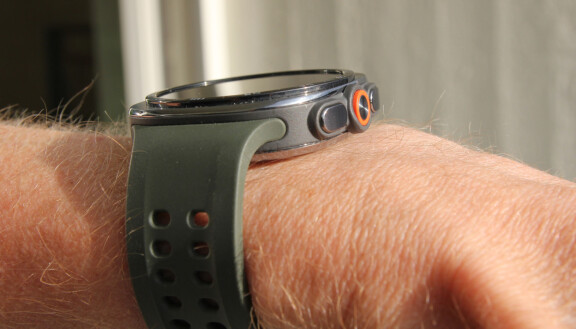
The watch is robust in materials that feel durable. It’s also a big watch, noticeably thicker than the Galaxy Watch 9, but thinner than its predecessor the Galaxy Watch Ultra, and I think it manages to avoid feeling bulky on my wrist. The fact that the watch has a round screen is taken away a lot by the fact that the watch itself is a rounded square with four protruding corners.
The Samsung Galaxy Watch Ultra 2 is only available in one variant, with a 47 mm case and built-in SIM card slot, and the price tag is SEK 8,200. That’s a lot for a watch, almost twice as much as the cheapest version of the Galaxy Watch 9 and SEK 3,000 more than the most expensive. You pay, among other things, to get a housing in titanium instead of aluminum, which feels like an unnecessary luxury. After all, most of what I see on the watch is plastic or glass.
The mobile network connection requires an add-on to your mobile subscription, which incurs an additional cost and which not all operators support. With it, you can, among other things, stream music and make phone calls without carrying your mobile phone. The battery consumption is acceptable, when I stream music, ten percent of the battery goes in a quarter and a quarter of a phone call drains 4 percent from the battery. But of course you can also download music in advance and save battery. The watch supports Spotify, Youtube Music and Deezer, among others, because Wear OS is a true smartwatch system where you can install third-party apps.
As I said, you can get mobile network connection with the regular Galaxy Watch 9 as well, but the Galaxy Watch Ultra 2 can handle 10 atmospheres of pressure instead of 5 atmospheres. This means that it can be used as a regular dive computer, and it tracks depth, time and water temperature from the wrist. Samsung has ensured that the watch has the special diving app Ultra 2 Diving developed together with Mares, which measures, among other things, descent speed and diving limits.
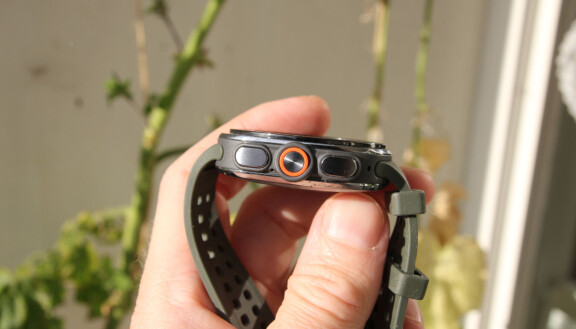
Programmable button
The Trail Run function is a special training mode that tracks height difference and terrain obstacles, among other things. If you’re neither diving nor trail running, however, you don’t get any special features in the Galaxy Watch Ultra 2 that you don’t get with the Galaxy Watch 9. However, you do get a significantly brighter screen, 5000 nits maximum brightness, and I never have any problems reading it even in direct sunlight. The watch also has a third button that you can program as a shortcut to your favorite function.
The watch is powered by a new processor from Qualcomm and feels decently fast, but not as immediate in its reactions as the Apple Watch does. 64GB of storage is generous with room to install apps and download playlists and maps.
Lots of measurements
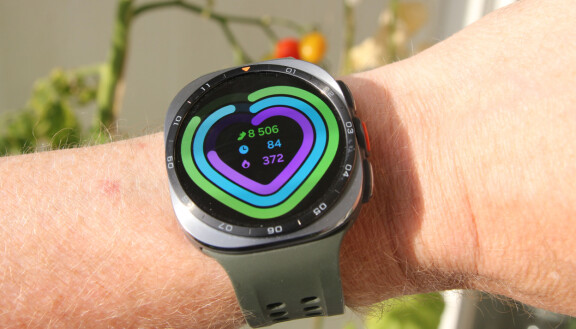
Samsung’s Galaxy Watch watches measure a large amount of health data, either passively or by you actively choosing to take a measurement. Of course, you have everything you expect in the form of pulse, pulse variation, number of steps, sleep stages, oxygenation in the blood and more, but here you also find blood pressure measurement, and exotic measurements such as the amount of antioxidants in the body and vascular load. It’s honestly hard to navigate through all these health metrics, and Samsung’s Galaxy Health app doesn’t do a great job of explaining and summarizing these results. It gets messy. But I focus on the basics and like the heart that measures everyday exercise in three categories in the form of heart-shaped circles that fill up during the day. My exercise rounds receive detailed information with facts and maps. The GPS is supposed to be extra accurate, but the way my route wobbles on the map suggests Samsung still isn’t great at this compared to other watches. The differences to how I actually moved are small, but I haven’t had the chance to try in more demanding environments such as big cities with skyscrapers.
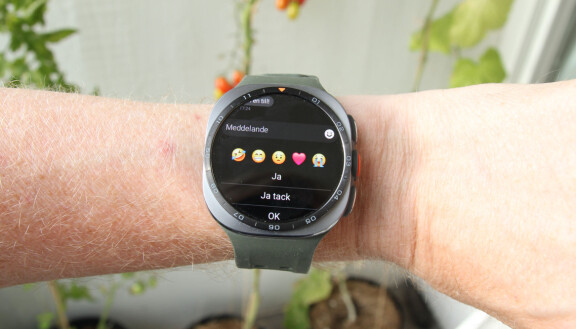
From a smartwatch, I expect to be able to receive notifications to the watch and respond to them directly from the wrist. With the Galaxy Watch, I can reply with pre-selected instant messages, emojis, or even type something on the on-screen keyboard. You can also make payments with Samsung Wallet, which has the widest banking support of any payment service. Another feature worth mentioning is the movement reminders when you’ve been sitting still for an hour, suggesting quick exercise exercises with visual instructions.
Besides apps, you can also install watch faces, but I’m happy with the one that comes pre-installed, which presents a lot of information at a glance. I especially like that I can click through from each field to get more information associated with that value.
I like Samsung’s interface to Wear OS, and the lack of battery life may not be Samsung’s fault as much as the system’s. But I have a hard time feeling that the Galaxy Watch Ultra 2 offers benefits that justify the massive price premium. At least not if you don’t have diving as a hobby.
- Rating:
- 7/10

Measure: 47.1 x 47.4 x 10.7
Weight: 61.5 grams
Screen: Round 1.5 inch, 498 x 498 pixels, Super Amoled
Material: Frame in titanium, screen in sapphire glass
Processor: Snapdragon SW6100 Wear Elite, manufactured in 3-nanometer process
Memory and Storage: 2 GB RAM, 64 GB storage
Battery: 800mAh
Operating system: Google Wear OS 7 with one UI Watch
Sensors: Temperature Sensor, Accelerometer, Barometer, Gyro, Geomagnetic Sensor, Light Sensor Accelerometer, Barometer, Bioelectrical Impedance Analysis Sensor, Electrical Heart Sensor, Gyrosensor, Geo-Magnetic Sensor, Light Sensor, Optical Heart Rate Sensor, Temperature Sensor
Works with: Android (some functions require a Samsung mobile phone)
Uncomplaining: 10ATM, IP69K
Price: From SEK 8,200
Better battery life than the Galaxy Watch 9
Bright screen
Expensive
Loading slowly