Google Company published web browser release Chrome 125. Simultaneously available stable release of a free project Chromium, which serves as the basis of Chrome. Chrome browser is different from Chromium using Google logos, the presence of a system for sending notifications in case of a crash, modules for playing copy-protected video content (DRM), a system for automatically installing updates, constantly enabling Sandbox isolation, supplying keys to the Google API and transmitting RLZ parameters when searching. For those who need more time to update, the Extended Stable branch is separately supported, followed by 8 weeks. The next release of Chrome 126 is scheduled for June 11th.
- Google has postponed its expected end of year support for third-party cookies set when accessing sites other than the domain of the current page (such cookies are used to track user movements between sites in the code of advertising networks, social network widgets and web analytics systems). In the new version, to identify sites that use third-party Cookies, an indicator with an eye has been added to the address bar, which is crossed out when third-party Cookies are blocked. Since testing continues to disable third-party Cookies on 1% of users and there are options for manual disabling through the “chrome://flags/#test-third-party-cookie-phaseout” setting, the context menu provides the ability to temporarily return support for third-party Cookies for selected sites . Cancellation of blocking is valid for 90 days after activation.
- When you enable enhanced browser protection (Safe Browsing > Enhanced protection), automatic deep scanning of downloaded files is implemented, performed by uploading information to Google servers (previously, before sending, a request was displayed to confirm external verification, but now the verification will be performed automatically).
- Builds for the Windows platform are now available for the ARM64 platform.
- A new mechanism has been added for updating components that require loading a large amount of data. We're talking about updating models for recently added features that use machine learning – a smart tab grouping mode, a theme generator, and an interactive assistant.
- We've added two new types of potentially problematic add-ons that will prompt users to think about their continued use: add-ons not installed from the Chrome Web Store, and add-ons that use deceptive tactics to force installation of unnecessary software.
- The behavior when canceling the “mousemove” event has been brought into line with other browsers – canceling the event no longer blocks text selection and drag&drop operations (to block selection and drag&drop, you must cancel the selectstart and dragstart events).
- Added a set of CSS properties to control the display of elements anchored to the location of other elements (CSS Anchor Positioning) without using JavaScript, for example, to attach popovers to elements, appearing similar to tooltips. To configure the anchoring of an element to another element and defining the output area, the anchor-name, position-anchor and inset-area properties have been proposed; the anchor() function has been added to obtain information about the anchor location.
- Math functions added to CSS
round(),mod()Andrem(). - Added new syntax for reflecting the state of custom elements in CSS, allowing the use of the ” pseudo-class:state()“.
- Added API Compute Pressurewhich allows you to obtain high-level information about the current state of the hardware, for example, in general terms you can get information about the load being created on the CPU (levels are indicated: minimum load with power saving enabled; permissible load, allowing you to run additional tasks without problems; high load, but at the limit acceptable values and not interfering with the operation of the system; critical load close to exhaustion of resources).
- API Storage Accessused to prompt the user for permission to access Cookie storage if third-party Cookies are blocked, has been extended to require access from third-party handlers (e.g., content inside an ‹iframe›) to non-Cookie storage such as indexedDB.
- Added origin trial API support Viewport Segments Enumerationdesigned to organize output to devices with folding screens.
- Provided the ability to use HTTP and HTTPS URL schemes in the WebSocket constructor instead of the “ws:” and “wss:” schemes.
- JavaScript allows the use of modifiers “?i”, “?-i”, “?m”, “?-m”, “?s”, “?-s” within regular expressions to control whether the “i” flags are set or disabled. “s” and “m”. For example, “?-i” in “re1 = /^(az)(?-i:(az))$/i;” will disable the application of “/i” (case-ignoring) for the second character (re1.test(“aB”) will return false).
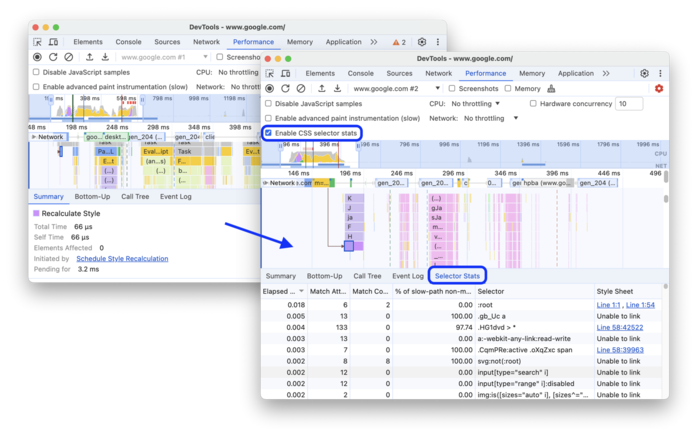
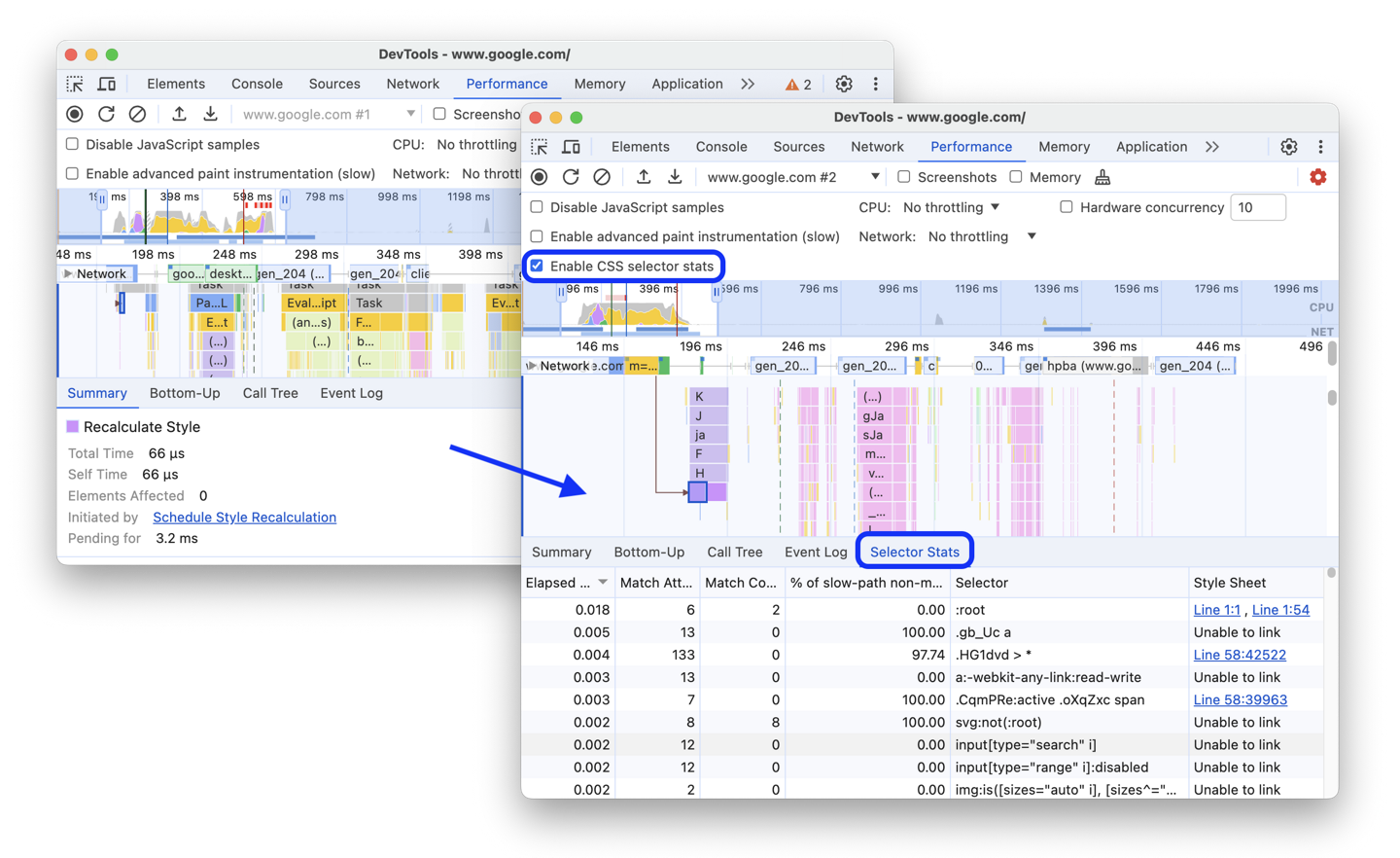
- Submitted improvements to tools for web developers. A button has been added to the web console to display an explanation of the essence of the error or warning generated by contacting the Gemini AI chatbot. Added support for “@position-try” rules in the CSS panel. In the panel for editing and viewing the source text of a page, settings have been added to make packed pages readable and to automatically close brackets when editing. The Network Activity Tracker has added support for HTTP headers used in 103 “Early Hints” responses. Added statistics on CSS selectors to the performance analysis panel.
In addition to innovations and bug fixes, the new version eliminates 9 vulnerabilities. Many of the vulnerabilities were identified as a result of automated testing with tools AddressSanitizer, MemorySanitizer, Control Flow Integrity, LibFuzzer And AFL. The vulnerability CVE-2024-4947, caused by incorrect handling of types (Type Confusion) in the V8 engine and classified as dangerous, was used by attackers to carry out zero-day attacks before being fixed. No critical problems have been identified that would allow one to bypass all levels of browser protection and execute code on the system outside the sandbox environment. As part of the program for the payment of monetary rewards for discovering vulnerabilities for the current release, Google paid 4 awards in the amount of 8 thousand US dollars (one award of $7000, $1000 each). The size of the two rewards has not yet been determined.
Thanks for reading: