Rating
- Telephony & Data
- 9/10
- Media & Screen
- 9/10
- Systems & programs
- 8/10
- User experience
- 8/10
- Materials & quality
- 8/10
- Total rating
- 84%
Get rid of unnecessary apps
The cameras, at least for the most part
Google’s new smart features come here first
The battery life
A large part of the AI functions are missing for Swedish users
The user interface could be improved
Google is not like other mobile manufacturers. After all, they make good money from the operating system and do not need to make a profit on their own mobiles, on the contrary, if they are too successful, they compete with their own customers.
The Pixel phones are rather a kind of technology platform where Google can try out new software on its own hardware platform, in recent years mainly AI. The Pixel mobiles have also gained a devoted group of followers who believe that they represent Google’s pure vision of how Android should be combined with superior cameras.
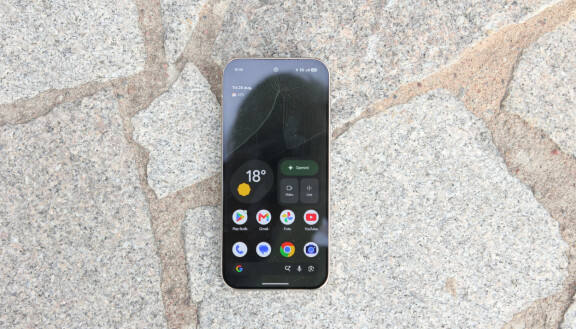
The system is of course Android 17, and Google promises seven years of system updates, security updates and the special feature updates, so-called Pixel Drops, which give the phones new features gradually. Especially the latter are appreciated by the fans.
The fact that the system is so clean has, in my opinion, advantages and disadvantages. Of course, you have no pre-installed apps other than Google’s, so you can fill the phone with exactly the content you want. On the other hand, Google insists on certain quirks in the interface that are the first that the other manufacturers change when they get their hands on the system. For example, you need to swipe twice to access the settings shortcut in the status bar, a button that you want to have as easy access to as possible. Overall, the status bar is quite inefficiently organized.
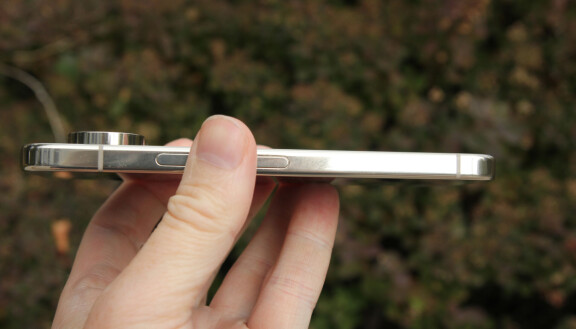
Larger camera island with notification light
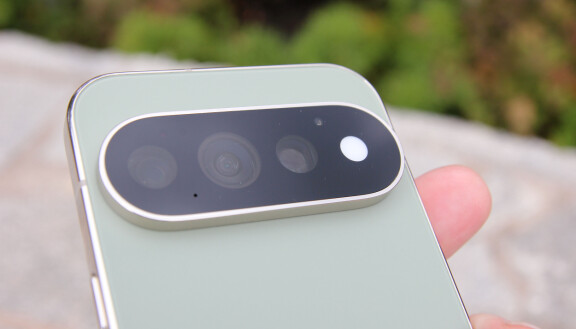
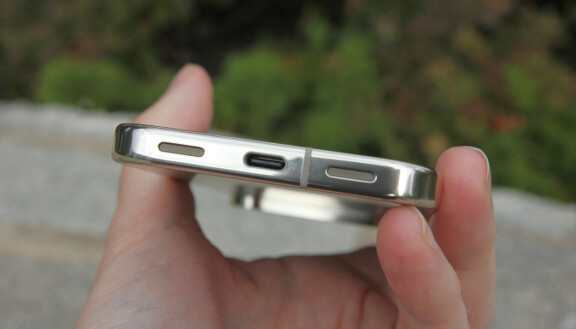
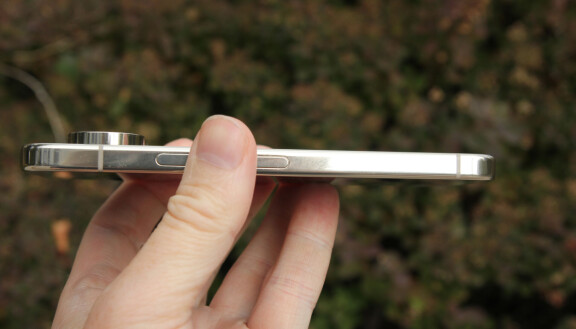
The design of the Pixel 11 Pro has looked more or less the same for three generations now. It is a relatively compact mobile (if you want a larger screen, there is the more expensive Pixel 11 Pro XL), but heavy for its size and with a large protruding camera strip on the back. On Pixel 11 Pro even more protruding than in previous generations. The fact that the camera island runs the length of the phone means that it can lie firmly against a table without tipping over when you tap the screen.
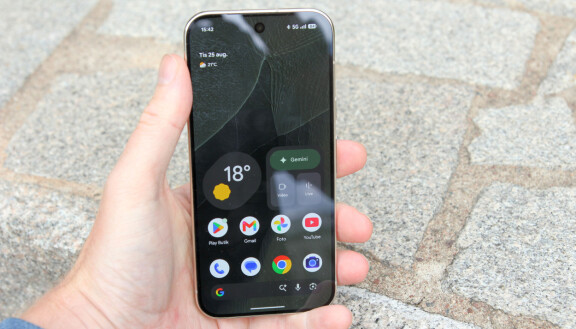
The main novelty in the physical design is that the photo light can now function as a notification light, but the functions are extremely limited. On the one hand, the light pulses when you talk to Gemini to show that the phone is listening, and on the other hand, you can make it glow in a certain color when one of your favorite contacts calls, but there are only five colors to choose from. Granted, Google says more features will come in future Pixel Drops, but don’t count on it to be able to flash if you have a notification from a favorite contact.
A novelty compared to last year is that the screen has a higher maximum brightness. There is a difference that is noticeable when using the mobile phone in the sun. Then I also notice that the screen lighting is uneven and I get darker shadows at the edges of the screen, something you don’t get on, for example, Samsung’s top models. Otherwise, the screen is high resolution, fast, and can show the clock and notifications even when the screen is off.
According to Google, the screen is twice as resistant to scratches as its predecessor thanks to an extra scratch-resistant layer. I have not tested this in practice.
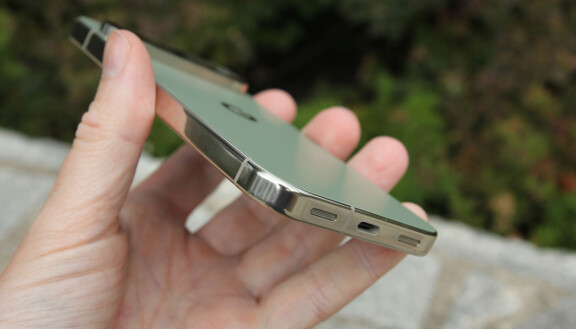
The Pixel 11 Pro is powered by the Tensor G6 chipset, which according to Google should provide 25 percent faster web browsing and 15 percent faster app loading. specifying such specific measurements turns out to be because, as a whole, measured in performance tests, the Pixel 11 Pro is not at all faster than the Pixel 10, and the results are more in line with mid-priced mobiles from other manufacturers than with other top models. Google says they don’t care about performance testing and that proprietary circuits allow them to optimize the experience for their own software. You have to give Google credit there, because the phone never feels anything other than fast and flexible when you use it. In any case, the performance improvement that Google cares most about is probably that the speed of AI calculations has been increased by 50 percent with the Tensor G6.
The Pixel 11 Pro is sold in 12/256 GB, 16/512 GB or 16/1024 GB configurations. The cheapest variant thus has more storage but less working memory, a consequence of the memory shortage that affects the entire mobile industry. Google is said to have optimized Android 17 to work better with less memory. Our test sample has 16/512 GB, so we cannot judge how the performance of the cheapest variant is affected.
Stable camera setup
The camera setup is similar but not identical to its predecessor. That is, you have a main camera with a 1/1.3-inch sensor, a wide-angle camera with a 1/1.95-inch sensor, and a telephoto camera with five times optical zoom and a 1/2.51-inch sensor. But the inch measurements are slightly different from the previous generation. Although only the wide-angle camera is clearly larger, it speaks to the use of newer sensors that are potentially better. Above all, the processor’s increased performance for post-processing is noticeable in several areas.
One such area is that you can take sharp pictures with up to 120x zoom, compared to 100x in the previous generation. Although the images are created with generative AI that guesses what the image should look like based on the blurry image the sensor delivers and the guess is far from always correct. At around 30 times the zoom, I think it is capable of producing good images.
Another is faster dark images. Where other mobile cameras may need 3-4 seconds for a dark image, the Pixel 11 Pro takes the image in one second. But with some compromises in image quality
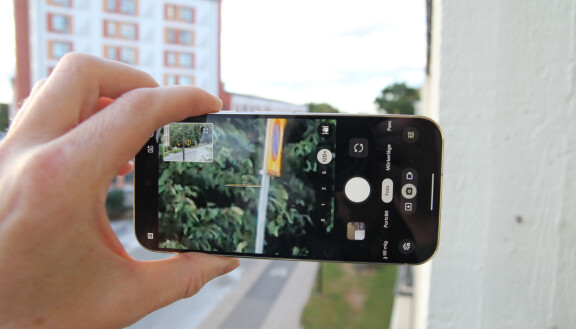
Many people think that the Pixel phones have the best mobile cameras on the market. I can agree that for a compact mobile it is hard to find better. Overall, the image result is excellent in most situations. But I also think they have weaknesses. The color reproduction sometimes feels a bit cold, and photos taken in sunlight look as if they are cloudy. Google relies heavily on what they call computational photography, calculating photography where multiple exposures are combined and great emphasis is placed on post-processing. Sometimes the result is weird, like for example a house facade where small differences in the color of the surface structure are emphasized so that the house looks completely checkered in the picture. And despite all the talk of combining the output from multiple sensors, google is surprisingly bad at pixel binning, that is, taking cropped images at full resolution to get more zoom out of the cameras.
Wing clipped AI
In case anyone missed it, Google is hot on AI, and most of the news in the Pixel 11 Pro is new AI features. The problem is that not all of them are accessible to us Swedes. It could be that they are developed for American conditions or lack Swedish language support. Whatever it is, in Sweden we only get a limited selection of AI functions, with a certain emphasis on the cameras. In addition to the functions I mentioned, there is Magic moment where instead of taking a still image you record a movie, Google uses AI to select the best moment to take a still image of, and the image is also sharpened and cropped if necessary.
Another feature is Rambler, where when you enter text you can choose to dictate with a microphone, and you can stutter, say um and like and change your mind, and out comes a correct and tidy version of what you meant. We will see this function in more mobile phones than the Pixel in the future, but the Pixel 11 series is the first.
Examples of AI functions we will be without are the proactive Gemini that will anticipate what I want and make suggestions for actions directly in the system, for example if it sees a calendar event that involves a trip, it can help book a taxi. But not for us, that is.
Battery life has always been a weakness of Google’s mobiles, and this also applies to the Pixel 11 Pro. On paper, the phone has as good a battery capacity as other similar mobiles, but where Google uses its own Android straight away, other manufacturers take and modify it to minimize power-sucking background activities. Therefore, in our battery test where we stream video at maximum brightness, we get quite a bit of screen time, but it is also noticeable that the phone can lose quite a lot of battery when it is resting and not in use.
The criticisms I have of the Pixel 11 Pro are relatively minor and don’t stop it from being an excellent phone. Those who are fans of the Pixel series probably think even that criticism is unfair and disagree. But even for fans, there are few reasons to rush out and buy a Pixel 11 Pro. The differences to the predecessor, and for that matter the model before it, are small, while the mobile phone has become noticeably more expensive. Why not take the opportunity to buy a Pixel 10 Pro when it gets cheaper? Most of the features that are new in the Pixel 11 come with feature updates.
Questions and answers
How are the speakers? The stereo speakers have a balanced and full sound that is good for watching movies.
Does the Pixel 11 Pro have wireless charging? Yes, and it has also become faster, 22.5 watts maximum charging speed.
Does Pixel 11 Pro support magnetic mount for wireless charging? Yes, Google calls it Pixelsnap, but it’s the Qi 2 standard that’s used.
An alternative
Last year’s Pixel 10 Pro is cheaper going forward, has basically the same good cameras, isn’t slower, and will be updated almost as long.
Camera example

The sharpness of the images from the Pixel 11 Pro is excellent, but sometimes the color reproduction can feel a little cold.
Rating
- Telephony & Data
- 9/10
- Media & Screen
- 9/10
- Systems & programs
- 8/10
- User experience
- 8/10
- Materials & quality
- 8/10
- Total rating
- 84%

Facts
Generally
Model Pixel 11 Pro
Manufacturer Google
Launch date 2026-08-12
Measure 152.7 x 71.9 x 8.4 mm
Weight 204 g, 96%
Back material Glass
Price From SEK 14,490
System Android
System version 17
Promised system updates 7 years of system updates, security updates and pixel drops
The chipset Google Tensor G6
Manufacturing process 2 nm, 51%
Web
4g band Band 1 (2100 MHz), Band 3 (1800 MHz), Band 4 (1700 MHz), Band 7 (2600 MHz), Band 8 (900 MHz), Band 20 (800 MHz), Band 28 (700 MHz), Band 38 (2600 MHz TDD)
5g band 1 (2100 MHz), 3 (1800 MHz), 7 (2600 MHz), 8 (900 MHz), 20 (800 MHz), 28 (700 MHz), 40 (2300 MHz), 77 (3700 MHz), 78 (3500 MHz)
Dual SIM card slots No
Support for e.g Yes
Support for Wifi calls Yes
Screen
Measure 6.3 inches, 92%
Resolution 2856 x 1280 pixels
Screen format 20:9
Pixel density 495 ppi, 114%
Type OLED
Type of screen glass Gorilla Glass Victus 2
Max brightness in part of the screen 3600 nits, 100%
Max brightness across the entire screen 2400 nits, 142%
Image refresh rate 120 Hz, 98%
Memory
RAM memory 12/16GB, 119%
Storage memory 256 GB, 512 GB, 1024 GB
Memory card slot No
Main camera
Max resolution, video 8K
Optical image stabilization Yes
Sensor size 1/1.3 inch
Resolution 50 Megapixels, 75%
Wide angle camera
Auto focus Yes
Sensor size 1/2.51 inch
Resolution 48 Megapixels, 187%
Picture angle 123, 103%
Telecamera
Sensor size 1/1.95 inch
Zoom level 5x
Resolution 48 Megapixels, 95%
Front camera
Resolution 42 Megapixels, 174%
Connections
Headphone jack No
Bluetooth 6.0
WiFi WiFi 7
Battery
Capacity 4850 mAh, 82%
Measured video time 9 hours, 4 minutes
EU Energy Class B
Battery life: EU measurement 47 hours, 36 minutes
Included charger No
Maximum fast charging 30W, 50%
Wireless charging Yes
Maximum power wireless charging 25W, 77%
Magnetic mount for wireless charging Yes
Battery life, charge cycles 1000, 89%
Durability
IP class IP68
Shock-resistant EU rating B
Repairability EU classification B
Miscellaneous
FM radio No
NFC Yes
Stereo speakers Yes
Fingerprint reader In the screen
Benchmark tests
Antutu 11 1671933, 80%
Antutu 12 1820985, 92%
Geekbench 6: Single-core 2135, 99%
Geekbench 6: Multi-core 5815, 90%
Geekbench 6: GPU 3233, 23%
3DMark Wild Life Stress Best 12522, 107%
3DMark Wild Life Stress Lowest 6286, 81%
Google Octane 56266, 107%
Jetstream 3 147.18, 97%
Get rid of unnecessary apps
The cameras, at least for the most part
Google’s new smart features come here first
The battery life
A large part of the AI functions are missing for Swedish users
The user interface could be improved