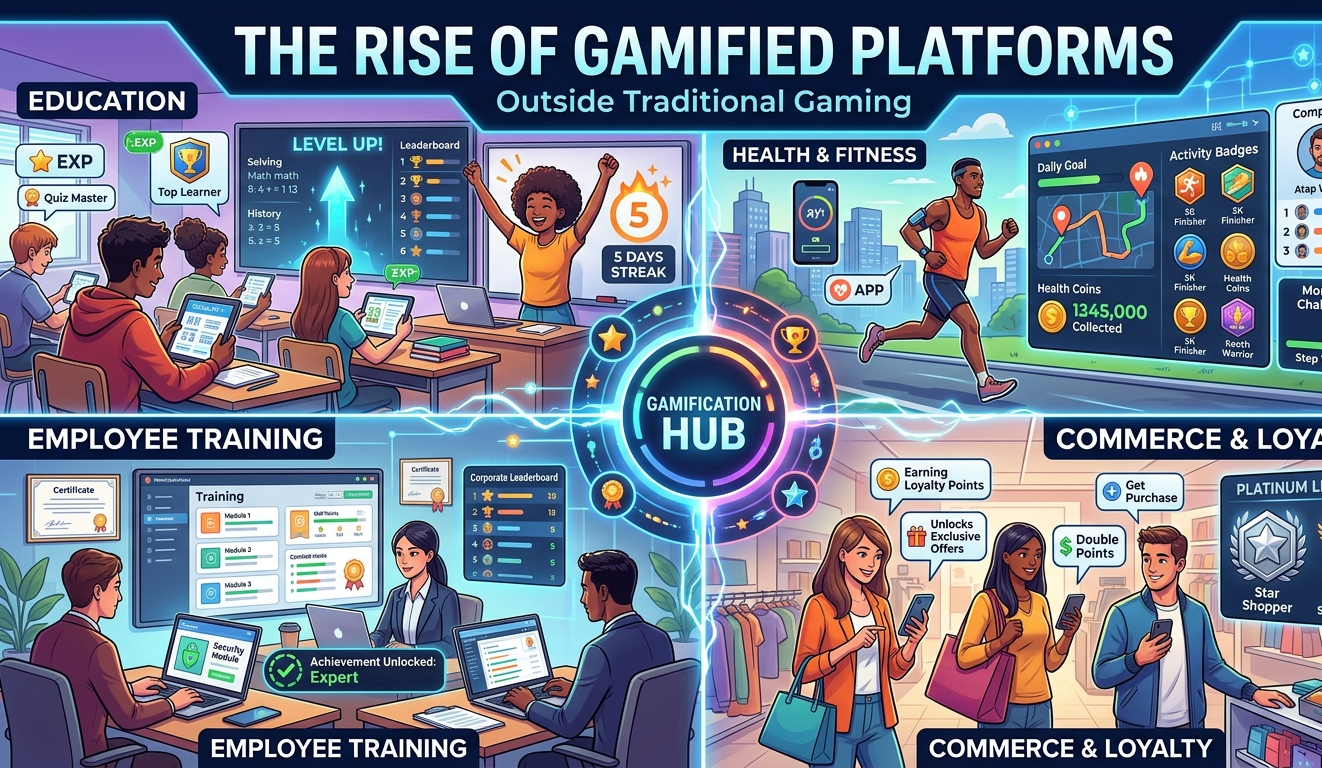
Gaming is no longer confined to consoles, PCs, or mobile apps designed purely for entertainment. Over the past decade, game mechanics have quietly expanded into other digital environments, shaping how people interact with everything from finance apps to online services.
What once made games engaging is now being used across a wide range of platforms. Progress bars, rewards, achievements, and daily incentives are no longer exclusive to gaming. They are becoming standard tools for keeping users active and involved.
This shift has created a new category of experiences where the line between gaming and non-gaming platforms is increasingly difficult to define.
How Gamification Became a Standard Design Tool
Gamification refers to the use of game-like elements in non-game environments. These elements are designed to encourage engagement, guide behavior, and make experiences feel more interactive.
Some of the most common features include:
- reward systems
- progression tracking
- daily or weekly challenges
- achievement badges
- streak-based incentives
These mechanics are effective because they tap into familiar psychological triggers. People naturally respond to progress, rewards, and a sense of completion.
Originally, these systems were refined within video games. Over time, developers and product designers realized they could be applied elsewhere with similar results.
Apps and Digital Services Are Becoming More Game-Like
Many modern apps now feel closer to games than traditional tools. Fitness apps reward users for consistency. Language learning platforms track streaks and milestones. Even productivity tools introduce progress tracking and achievement systems.
This is not accidental.
By incorporating game mechanics, these platforms create a sense of progression that encourages users to return regularly. Instead of simply offering a function, they provide an experience.
The result is higher engagement and longer user retention. In many cases, users may not even notice these systems consciously. The experience simply feels more rewarding and structured, making it easier to stay committed.
Finance Platforms Are Adopting Game Design Principles
One of the more interesting areas where gamification has expanded is finance.
Investment apps and personal finance tools now use visual progress indicators, milestones, and simplified interfaces to make complex actions feel more accessible. Some platforms even introduce challenges or goals to encourage saving and investing.
This approach lowers the barrier to entry. Tasks that once felt technical or intimidating are presented in a more approachable way.
However, it also changes how users perceive risk and reward.
When financial decisions are presented through a game-like interface, they can feel less serious, even if the consequences remain significant. This is why design choices in these platforms carry increasing importance.
Betting Platforms and the Role of Gamification
Betting platforms have also adopted many of the same mechanics seen in gaming and apps.
Modern platforms often include:
- reward-based promotions
- progress tracking for offers
- personalised incentives
- time-based campaigns
These features are designed to keep users engaged over longer periods.
A clear example of this can be seen in vedonlyönti bonukset. While traditionally viewed as simple promotional offers, they now function as part of a larger engagement system.
In markets like Finland, where betting culture is particularly strong, this becomes even more visible. Finland has long been considered an active betting country, with players engaging across both the state-owned monopoly system and international platforms.
On both sides, vedonlyönti bonukset, betting bonuses, play a central role. They are used to attract new users, retain existing ones, and create ongoing engagement through structured offers.
Rather than being one-time incentives, these bonuses are often built into the overall experience. Wagering conditions, ongoing campaigns, and layered rewards create a sense of progression rather than a single interaction.
This transforms the experience from a simple bet into something closer to a structured, gamified system.
At the same time, it highlights how closely betting platforms now mirror traditional game design, where engagement is built over time rather than driven by a single moment.
The Blurring Line Between Games and Platforms
As gamification spreads, the distinction between games and other digital platforms continues to fade.
What defines a game is no longer limited to graphics or genre. Instead, it is the presence of interactive systems that guide behavior and reward participation.
This shift raises interesting questions about how users engage with digital environments.
When a fitness app feels like a game, or a financial platform uses reward loops similar to mobile games, the expectations around user experience change. People begin to expect feedback, progression, and incentives in almost every digital interaction.
For developers and companies, this creates both opportunities and challenges.
Why This Trend Is Likely to Continue
Gamification is not a temporary trend. It is a reflection of how digital experiences are evolving.
As competition increases across platforms, keeping users engaged becomes more important. Game mechanics offer a proven way to achieve that.
They provide:
- clear structure
- ongoing motivation
- measurable progress
These elements make platforms more appealing and easier to use.
At the same time, there is growing awareness of how these systems influence behavior. As gamification becomes more widespread, discussions around responsible design and user awareness are becoming more relevant.
Final Thoughts
The rise of gamified platforms shows how deeply game design has influenced the broader digital world.
What started as a way to make entertainment more engaging has evolved into a core design philosophy used across industries. Apps, finance tools, and betting platforms all draw from the same set of principles.
Elements like vedonlyönti bonukset are just one example of how these mechanics are applied outside traditional gaming. They demonstrate how rewards, progression, and engagement systems are now integrated into many types of digital experiences.
As this trend continues, the gap between gaming and other platforms will likely become even smaller. What remains consistent is the underlying goal: creating experiences that keep users engaged, motivated, and coming back.