In France, contrary to what is often repeated, online voting has been possible since 2012. It is reserved for French people who reside abroad and who are registered on a consular electoral list. On the Internet, the first round of legislative elections takes place from June 25 to 27.
Every election, the same debate. There are on the one hand the pro-online voting, who are convinced that a website would massively increase participation, and on the other hand its detractors, who swear only by the voting booth and its guarantee of free voting . The question of cybersecurity is also at the heart of the debate, while digital voting seems unimaginable in France, which has only just dematerialized the proxy.
And yet, 2.5 million French people can already vote online. Since 2012, our compatriots abroad registered on a consular electoral list can vote via the Internet, provided they have provided an email and telephone number. Internet voting does not exclude the possibility of going to an office, but offers greater freedom to expatriates.
Legislative elections in advance on the Internet
In mainland France and the overseas territories, the early legislative elections of 2024 take place on June 30 and July 7.
For French people abroad who wish to vote online, the digital ballot opened on June 25 at noon (and will close on June 27 at the same time). The second round will follow the same logic, with a shortened window from July 3 at 12 p.m. to July 4 at 6 p.m. This larger window can be explained by the coexistence of different time zones and the desire to encourage as many citizens as possible to vote.
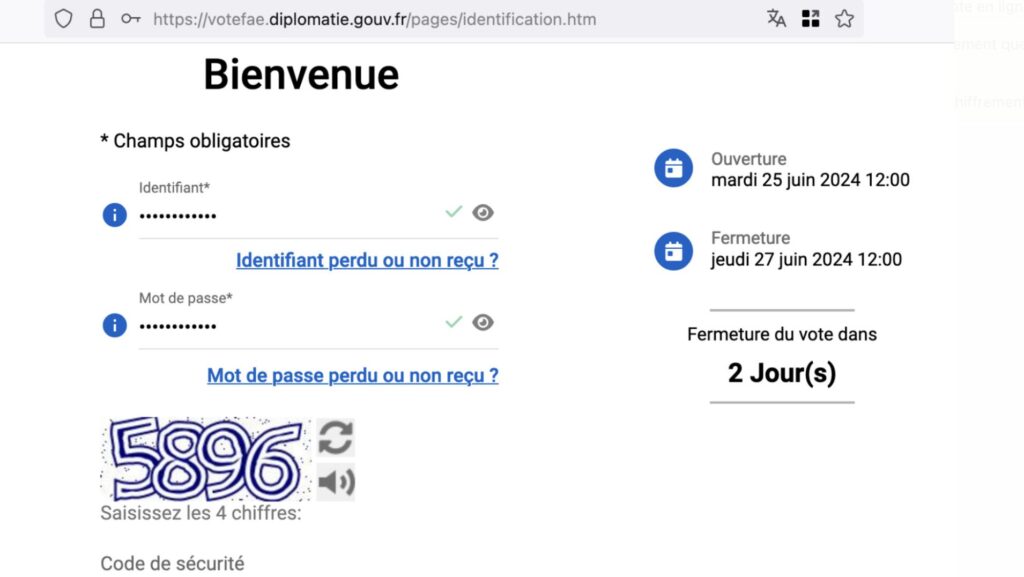
To obtain your connection information, simply go to your email box. A few days before the election, the consulate sends an identifier by email, which will be used to vote once, in its own name. The password arrives by SMS, to minimize the risk of hacking.
The username will change in the second round, like the password.
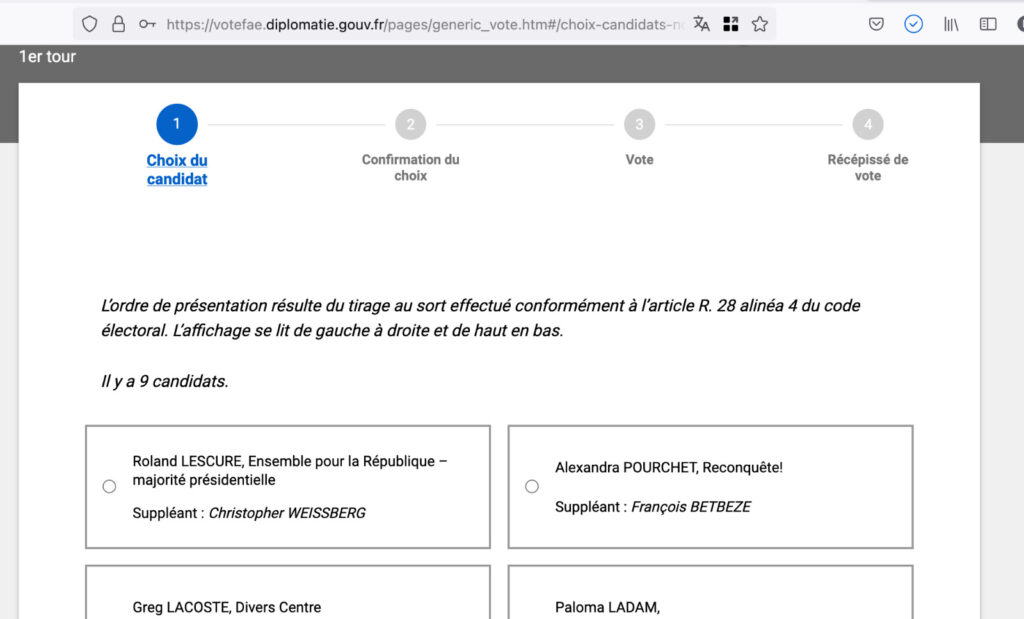
Visually, the Internet voting site is very simple (it even has a dark theme). Once authenticated, it presents a journey similar to any order on the Internet.
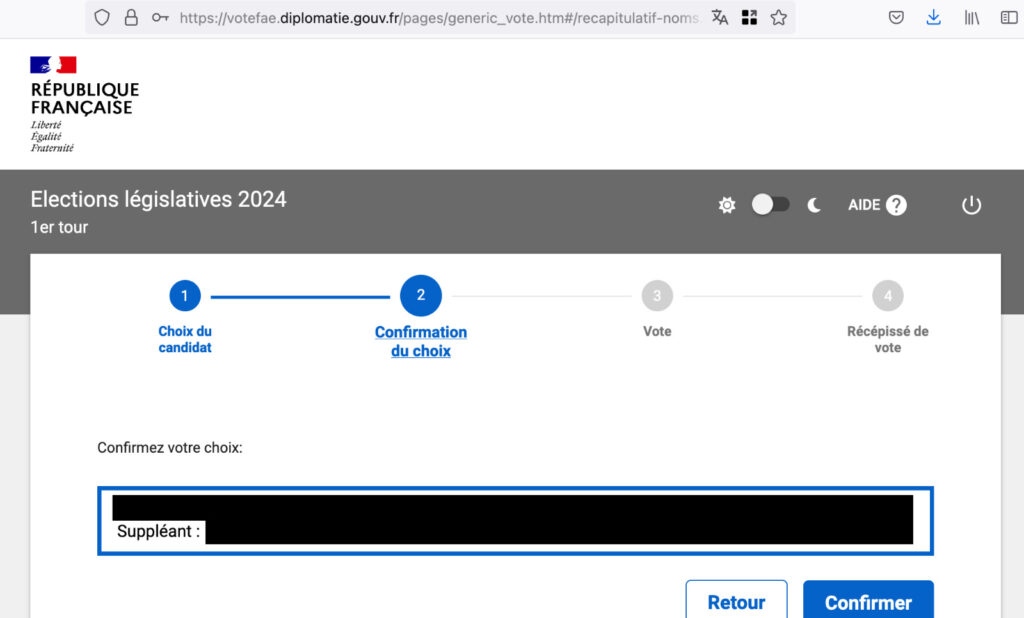
We first choose a candidate by checking their name (the programs are unfortunately not linked, you must consult them first), then we validate. The following page is used to verify that this is not an error, by displaying only the name of the selected candidate.
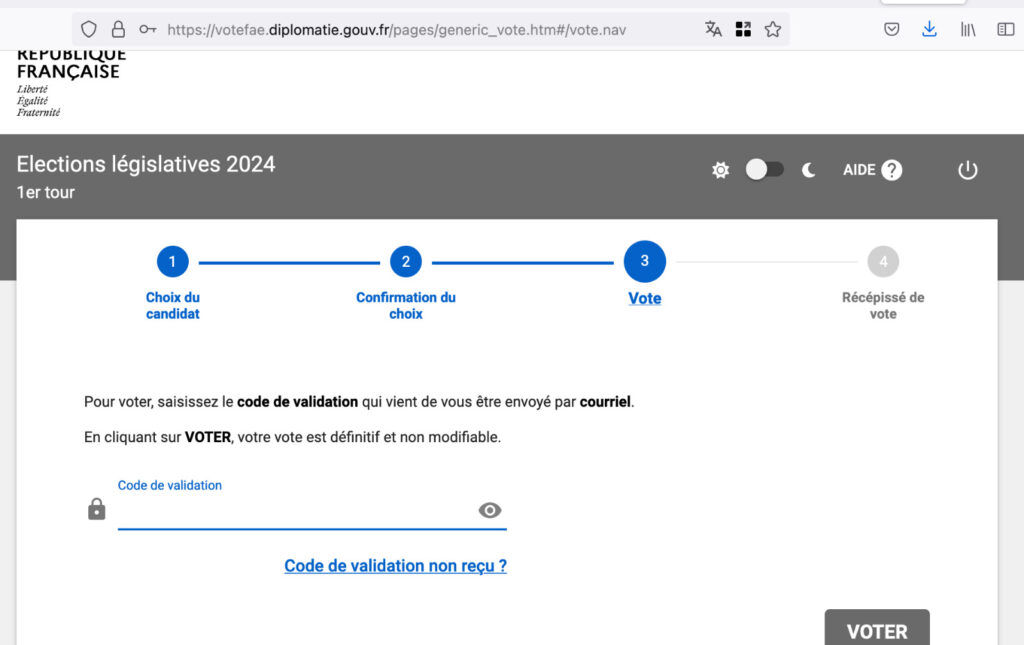
It is in step 3 that the first secure authentication occurs. To validate your vote, you must enter a six-digit code sent by email. The idea here is to avoid a data leak that would allow a malicious person to get their hands on several electronic votes.
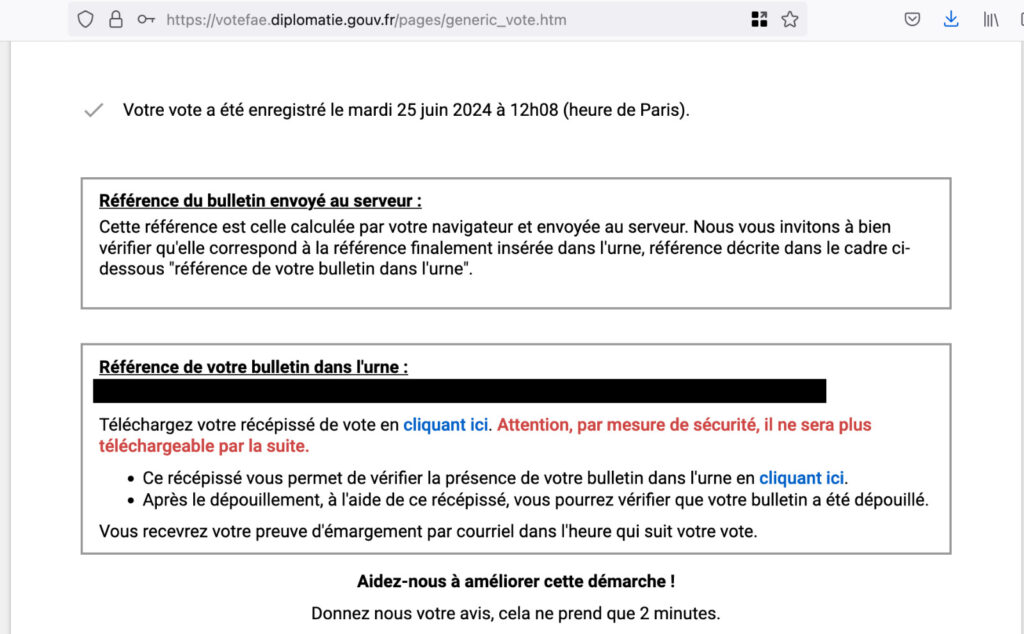
Finally, the last step consists of recovering a unique identifier aimed at proving your vote. The citizen must verify that the number returned by the servers is indeed the one sent by the browser. He can download proof of vote, which will then be used to verify that his electronic vote has been recorded by the consulate in his digital ballot box.
After the publication of the results, this unique identifier also allows you to know when your vote was counted to ensure that it counted.
Electronic voting soon across France?
Contrary to popular belief, online voting does exist in France. Some candidates, particularly from abroad, are campaigning for its generalization, even if this idea is far from unanimous. The vote of 2.5 million is considerable (even if most still vote in the offices), but is nothing compared to the entire electoral mass present in France. The system currently used would undoubtedly be difficult to implement in France, especially since digital identity technologies, such as France Idété, exist.
Moreover, it is surprising not to see digital voting go through France Idété or France Connect, even though these technologies are mandatory for proxy or access to the tax site. Perhaps a possible national test, in the more or less near future, will require a biometric identity to be able to vote online.
On Sunday, when France has voted, the Internet ballots will be counted automatically, then verified by human beings responsible for verifying their reliability. Records at consulates will indicate that people who have already voted online are no longer eligible to vote at the polls.