Akamai researchers have discovered a new NoaBot botnet, which attacks servers around the world. NoaBot is built on top of the self-propagating Mirai worm, uses SSH for attacks and installs a cryptocurrency miner into infected systems.
According to experts, NoaBot targets Linux devices and has been active since at least January 2023. However, unlike the original version of the Mirai malware, NoaBot uses SSH, rather than Telnet, in its attacks. In addition, instead of malware for organizing DDoS attacks, the new malware uses a modified version of the XMRig miner and is focused on cryptocurrency mining.
Akamai specialists have been monitoring NoaBot's activity over the past 12 months. To date, they have been able to identify 849 different IP addresses around the world from which attacks originate. Almost every one of them probably has a device already infected with NoaBot.
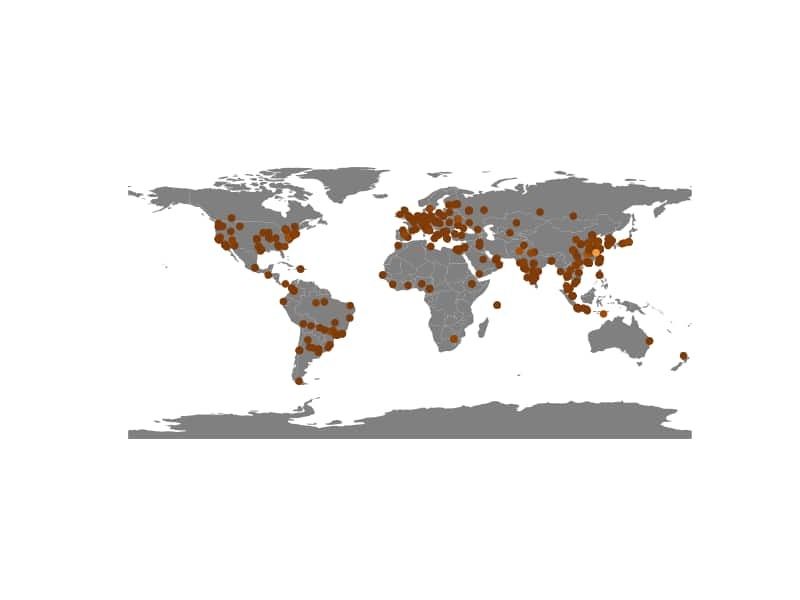
“At first glance, NoaBot is not a very complex campaign, because it is “just” another variant of Mirai and the XMRig cryptominer, of which there are a great many of them these days,” the researchers write. “However, obfuscation, malware, and additions to the original source code paint a completely different picture of the capabilities of these attackers.”
One of the most interesting features of NoaBot is the way it uses the XMRig miner. The fact is that usually after installing miners, funds are distributed to wallets specified in the settings, which are transferred to the infected device via the command line. However, this approach poses a threat to malware campaign operators because it allows researchers to track where wallets are hosted and how much money they received.
NoaBot uses a different technique to thwart such surveillance. The malware stores settings in encrypted or obfuscated form and decrypts them only after XMRig is loaded into memory. It then replaces the internal variable that would normally store command line configuration options and transfers control to XMRig.
Among other unusual features of NoaBot, experts list the following:
- The malware is compiled using the library UClibc, while the default Mirai uses the GCC library. An alternative library appears to change the way NoaBot detects antivirus products. Instead of detecting it as a Mirai malware, antiviruses classify it as an SSH scanner or a regular Trojan.
- NoaBot is compiled statically, which makes reverse engineering much more difficult.
- The strings are obfuscated and not stored in clear text, which further complicates the task of reverse engineers.
- The NoaBot binary runs from a randomly generated folder in the /lib directory, which makes NoaBot infections difficult to detect.
- Mirai's default dictionary, which contains a list of commonly used passwords, has been replaced with a new one that is so large that Akamai finds it impractical to check it all. Also, as mentioned above, the regular Mirai Telnet scanner has been replaced with a custom SSH scanner.
- The malware has many capabilities that can be used once compromised, including installing a new authorized SSH key to use as a backdoor, and downloading and executing additional binaries or spreading to new devices.
According to experts, some signs suggest that NoaBot may be linked to another well-known botnet, P2PInfect.
These assumptions are based on the fact that attackers have experimented with using P2PInfect instead of NoaBot in recent attacks on SSH servers. That is, hackers are probably attempting to switch to a new custom malware.