The most common passwords are also the worst of their kind. It’s literally a list of what not to choose.
It is by a tweet shared in the afternoon of November 15 that the new edition of the ranking of “ most used passwords » was announced. This year again, NordPass — a password manager — teamed up with IT security specialists to analyze a vast database weighing several terabytes.
This base was created from “ from various publicly available sources, including on the dark web », explains NordPass. The subsidiary of Nord Security, which also publishes a famous VPN service (NordVPN), specifies that “ these passwords have been stolen by various malware, such as Redline, Vidar, Taurus, Raccoon, Azorult and Cryptbot. »
For France, the top 20 is listed in the table below. They are classified by their degree of occurrence (“count”) in the analyzed database. The password is entered each time, with a guess at how long it would take an attacker to find it by testing various combinations. The value entered is therefore estimated.
| Ranking | Password | Time needed to decipher it | Countdown |
|---|---|---|---|
| 1 | 123456 | < 1 second | 86,656 |
| 2 | 123456789 | < 1 second | 38,771 |
| 3 | azerty | < 1 second | 36,579 |
| 4 | admin | < 1 second | 17,388 |
| 5 | 1234561 | 1 second | 14,994 |
| 6 | azertyuiop | 1 minute | 13,441 |
| 7 | loulou | < 1 second | 11,330 |
| 8 | 000000 | < 1 second | 11,169 |
| 9 | doudou | < 1 second | 10,204 |
| 10 | password | < 1 second | 9,552 |
| 11 | marseille | 1 day | 9,085 |
| 12 | password | 14 hours | 7,457 |
| 13 | 12345678 | < 1 second | 7,446 |
| 14 | pet | < 1 second | 7,125 |
| 15 | sun | < 1 second | 6,995 |
| 16 | horse | 2 minutes | 6,919 |
| 17 | 12345 | < 1 second | 6,822 |
| 18 | Password | < 1 second | 6,820 |
| 19 | Good morning | < 1 second | 6,741 |
| 20 | 1234567891 | < 1 second | 6,614 |
Tops that don’t evolve
Does this list remind you of anything? This is normal: it looks almost exactly like the one shared by Nordpass in 2019. These are the same passwords as found in these successive rankings (2019 to 2022), with astonishing consistency. As if nothing were changing, despite countless calls for more seriousness about digital hygiene.
NordPass does not provide open access to its study — you have to contact them to request it, which we did. We also requested clarification from the manager, because the top only moves very little from one year to the next (at least for the data linked to France), which questions the way in which the database is constituted.
The central question consists of knowing whether the basis used for the 2023 edition of the top takes up part or all of the leaks already studied in other editions of the NordPass tops — or if it only uses recent incidents, occurring since the last edition (2022). Several comments can be made from the answer to these questions.
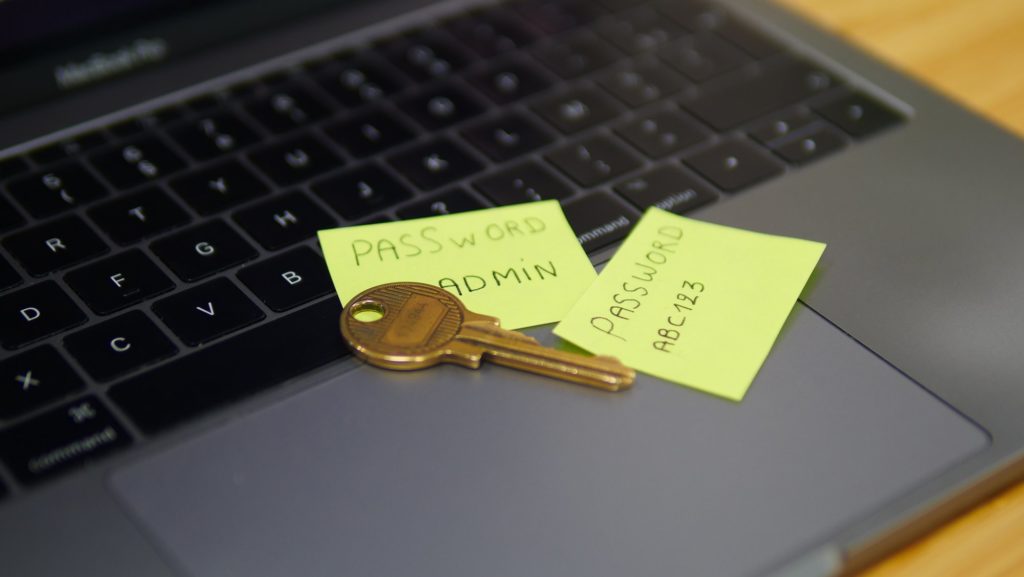
If the same aggregate is always used, the change in the top from one year to the next will be weak, or non-existent, even if it is gradually supplemented with new leaks. In 2021, the base used for the study weighed 4 TB. That of 2023 is announced at 4.3 TB (or 6.6 TB – NordPass is not clear), which suggests little evolution.
Another limitation: whether the archive changes or not, that says nothing about the attitude of Internet users after a security incident. If NordPass sees a leak and integrates the linked passwords, the study cannot know if the codes have since been renewed, and for something more solid. Nor can it reflect it. This can give rise to the impression that nothing is changing.
There are better practices to have
NordPass, naturally, preaches for his parish. This is a good opportunity for the company to highlight its solution for storing passwords and adopting better digital hygiene practices. Certainly, there are real merits to using these types of tools — rather than relying on memory or post-its.
Switching to a password manager is a good way to raise your security “game”: just like changing default passwords, enabling two-factor authentication whenever possible, and opt for unique and fairly long passwords — even more than complexity itself, size matters a lot.
Creating a good password requires following a few rules – like those in the CNIL guide. It seems off-putting, but the managers are there to relieve Internet users of the chore of memorizing. In the future, however, these worries may disappear once and for all. The reason ? Passkeys are well on their way to revolutionizing passwords.

The best password managers
- Newcomer to the sector
- Same group as NordVPN
- The best known and one of the oldest
- Modernized interface
- A French manager
- Monitor the dark web
See all MDP managers